
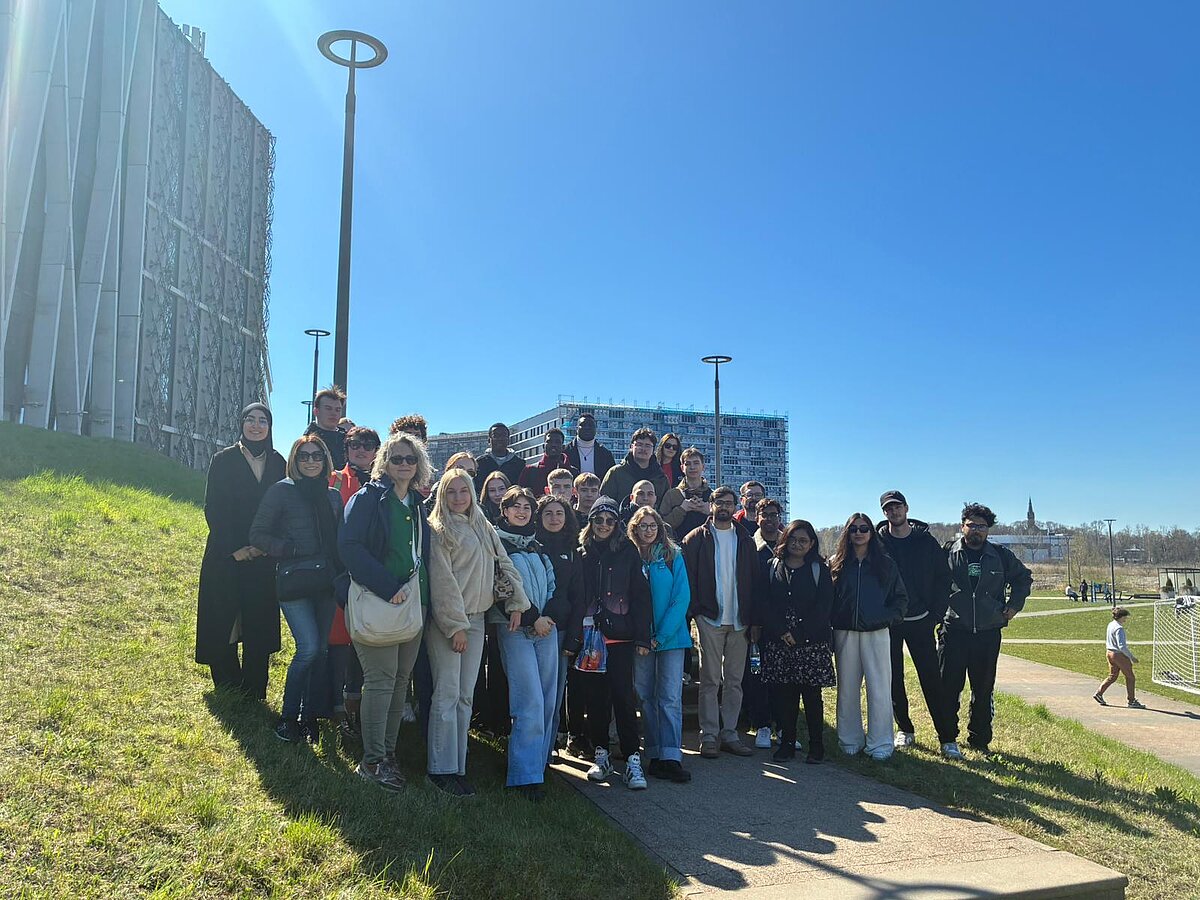
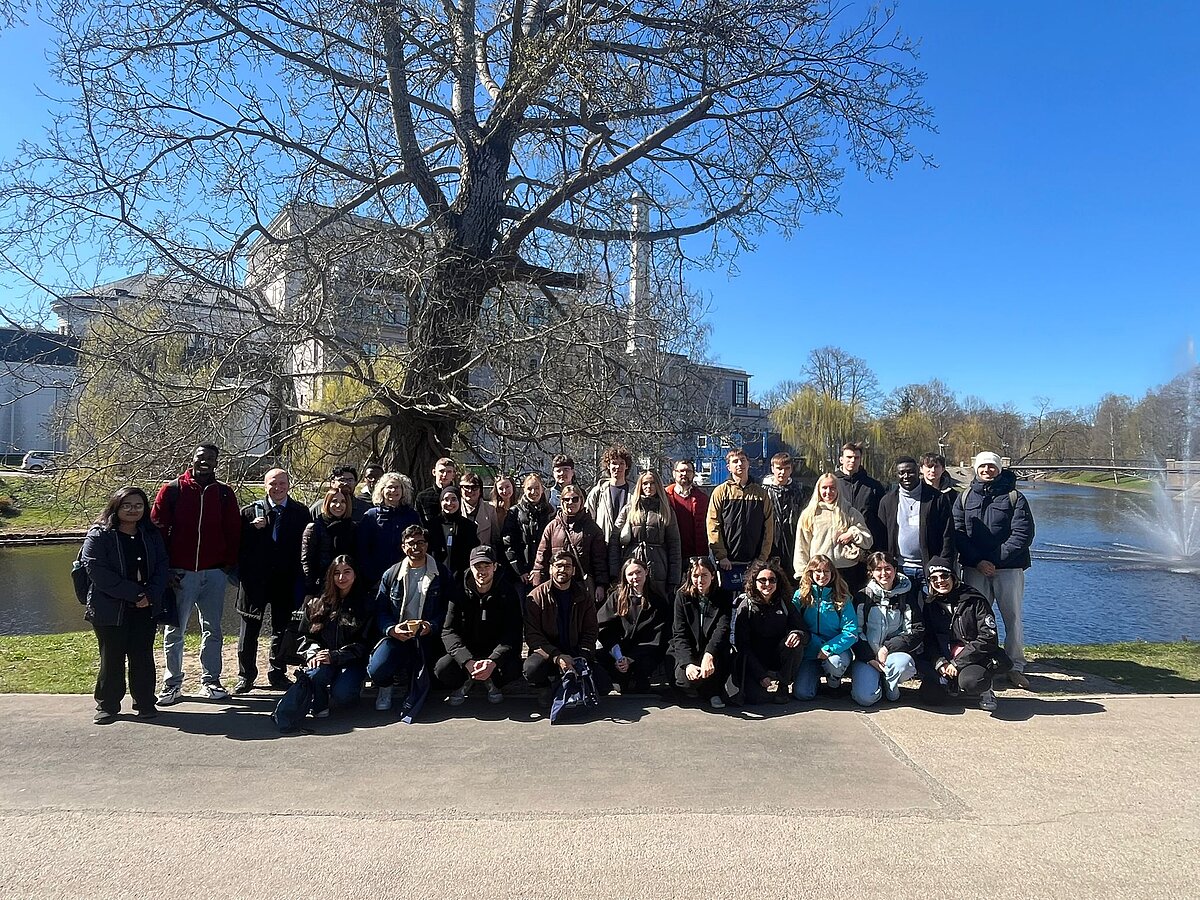
From 20 to 24 April 2026, FESS hosted the Erasmus+ Blended Intensive Programme (BIP) “Exploring the Circular Economy in Riga,” bringing together 31 students—25 international participants and six FESS students. Programme partners included the University of Valencia (Spain), the University of Palermo (Italy), and the University of Burgundy Europe (France).
Throughout the week, participants examined how circular economy principles are applied across business, public administration, higher education, and urban development in Latvia. Collaboration with partner universities enabled the programme to integrate diverse academic perspectives—from circular economy policy and sustainable business models to the blue economy and sustainable aquaculture.
“I really appreciated the opportunity to see the circular economy in practice in Riga—not only in lectures, but also in municipal operations, university sustainability initiatives, and during the visit to Getliņi,” shared one student from Lithuania. “This week helped me understand that sustainability is not an abstract concept, but a set of practical solutions that students themselves can engage in.”
Prior to arriving in Riga, students participated in four virtual sessions covering key principles of the circular economy, approaches to material reuse, examples of the blue economy in the Mediterranean region, and sustainable aquaculture production. This preparatory phase helped teams develop initial ideas for circular solutions, which were further refined during the on-site week through discussions, practical assignments, and study visits.
The programme opened with welcome addresses by FESS Dean Professor Jānis Priede and Professor Sandra Jēkabsone, followed by an introductory lecture on Riga as a hub for circular economy practices and sustainable collaboration. Students also explored the history of the University of Latvia by visiting its Main Building, the University Museum, and the Student Prison, gaining insight into its academic traditions and role within Latvia’s educational and cultural landscape.
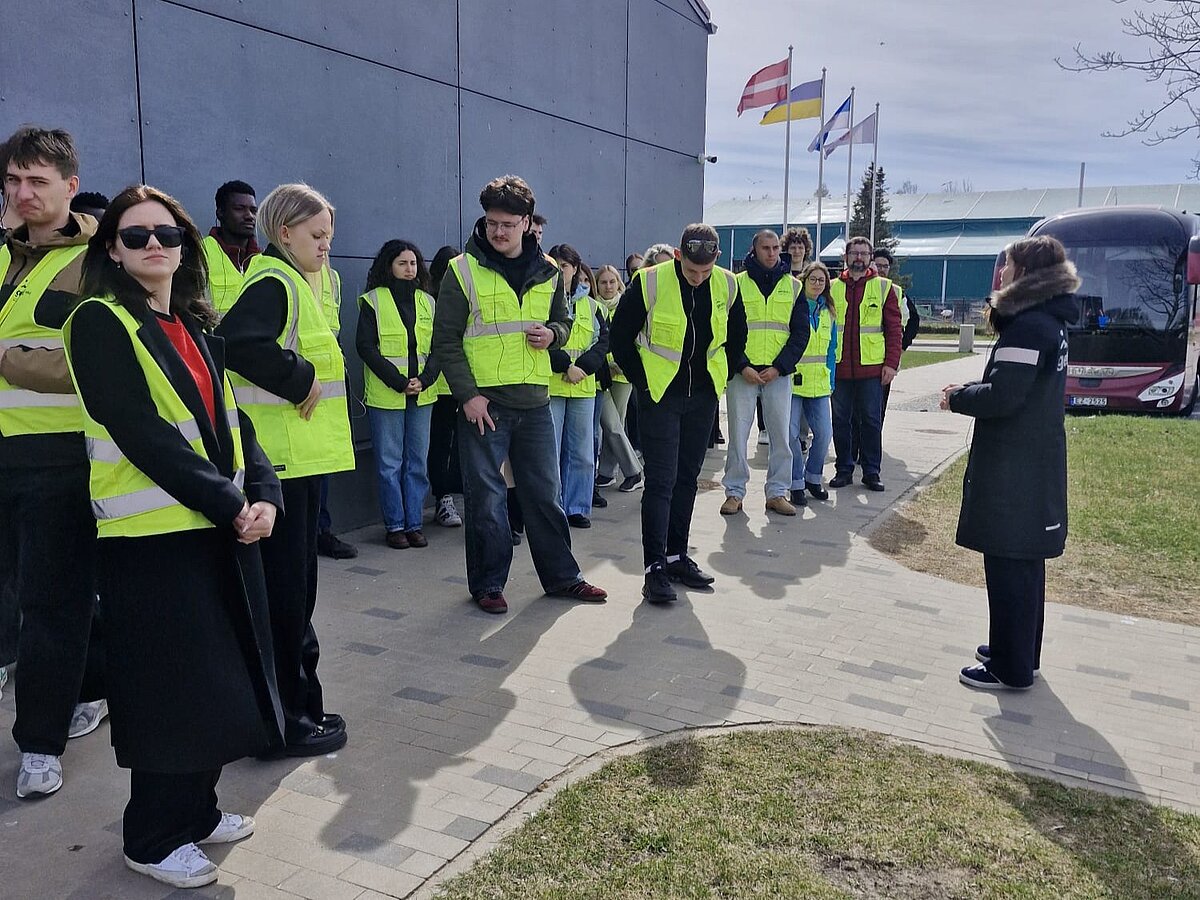
Participants particularly valued the opportunity to learn beyond the classroom. During the programme, they attended a lecture by ECO BALTIA vide, took part in a blue economy workshop, visited the Environmental Department of the Riga City Municipality, and explored sustainability initiatives at the University. One of the highlights was a visit to the Getliņi waste management and recycling site, where students observed how circular economy principles are applied in infrastructure, resource management, and energy efficiency.
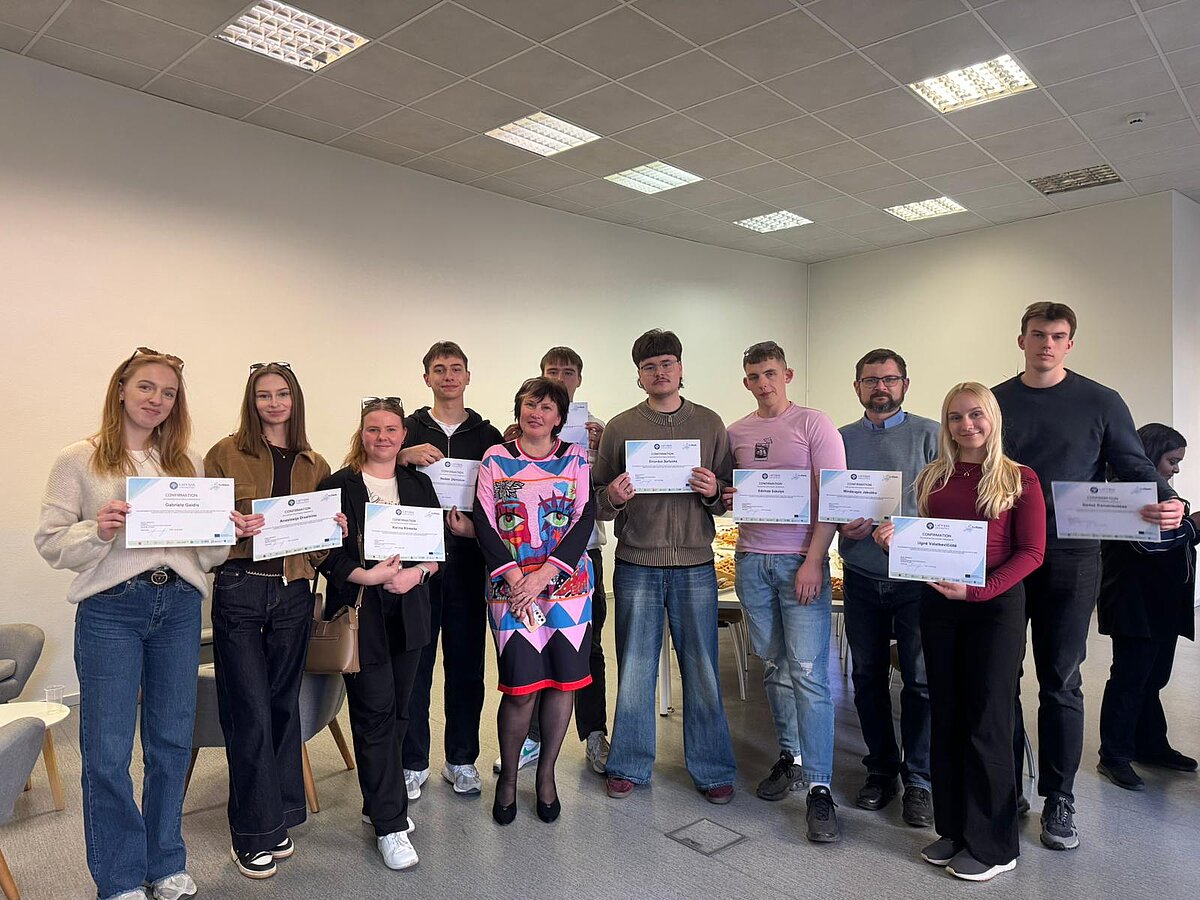
The programme successfully balanced academic learning with intercultural experience. A guided tour of Old Riga, a visit to the Central Market with tastings, and a closing event fostered informal collaboration and allowed participants to experience Riga as a dynamic example of sustainability, culture, and urban development. Reflecting on their experience, students emphasized that face-to-face interaction helped them connect theoretical knowledge with real-world decisions, processes, and challenges.
The BIP mobility “Exploring the Circular Economy in Riga” demonstrated that international and interdisciplinary studies are essential for fostering sustainable thinking. It provided students with the opportunity to collaborate in teams, compare experiences from different countries, and analyse circular economy solutions in the Baltic context. For the University of Latvia, the programme represented a valuable contribution to strengthening international cooperation and integrating sustainability into the study process.
 of the University of Latvia explored how circular economy and sustainability principles are implemented in Latvia.)