
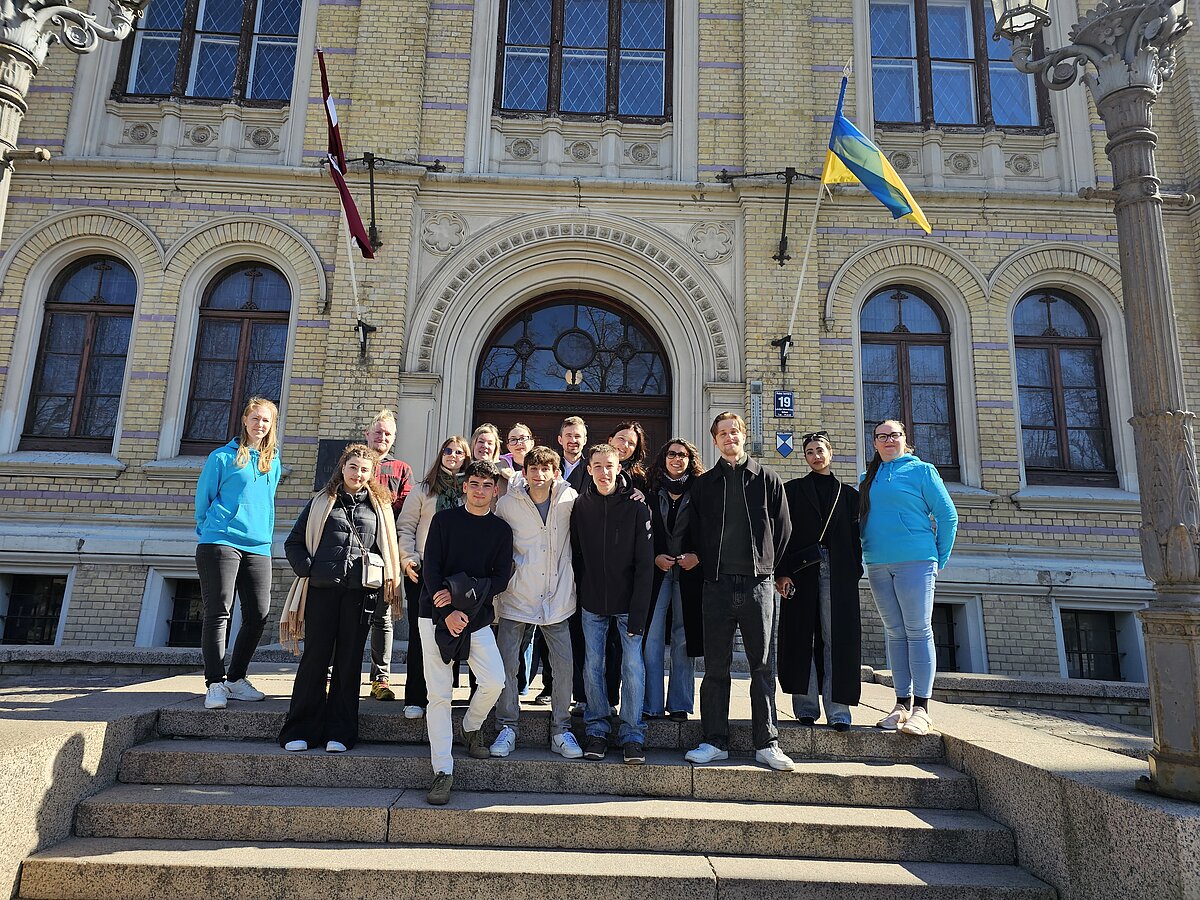
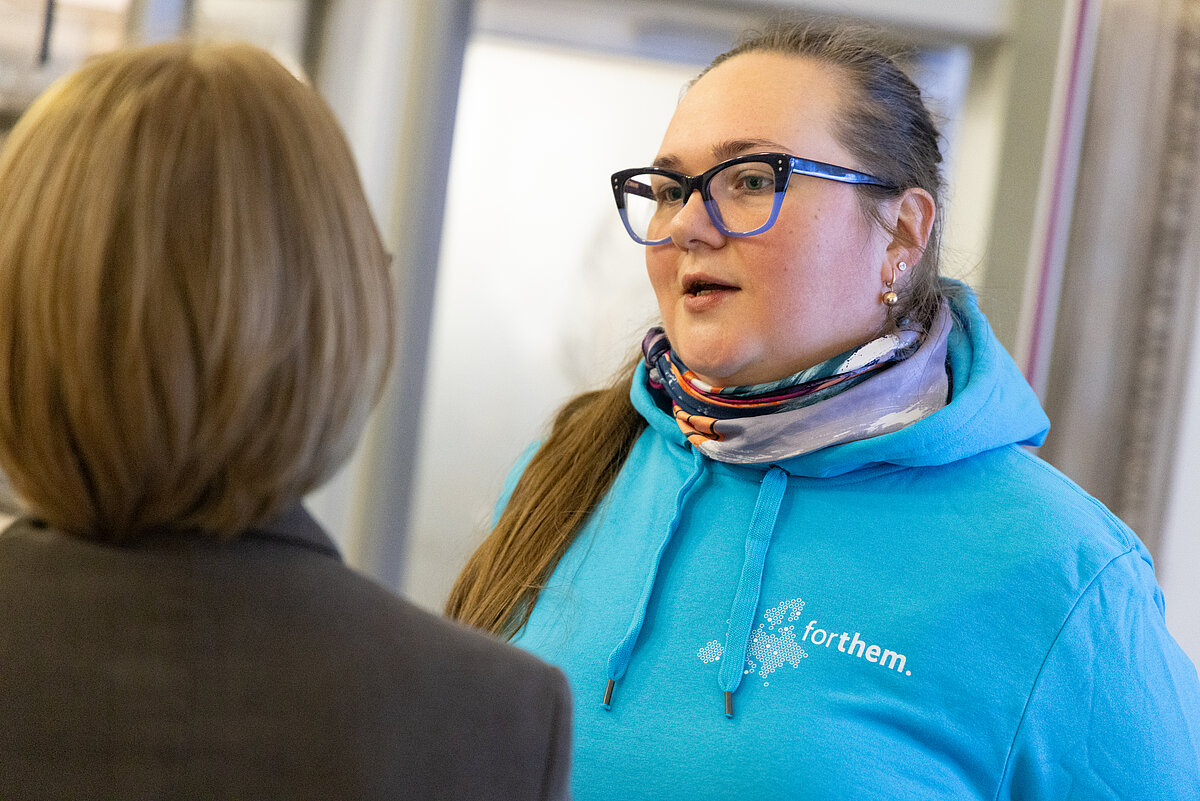
From 20 to 24 April 2026, the faculty hosted 15 students from across Europe—Finland, France, Germany, Romania, Norway, Italy, and Poland—within the programme “Critical Thinking in the Digital Age: The Challenges of Disinformation.” The programme in Riga was organised by the faculty under the coordination of international student advisor Aleksandra Kjakste.
The programme addressed one of the most pressing challenges facing modern democratic societies: disinformation in the digital environment. Throughout the week, students explored how disinformation, propaganda, and misleading information influence democratic processes, public trust in institutions, and individual decision-making. Particular attention was given to cybersecurity, strategic communication, media literacy, and the security context of the Baltic region.
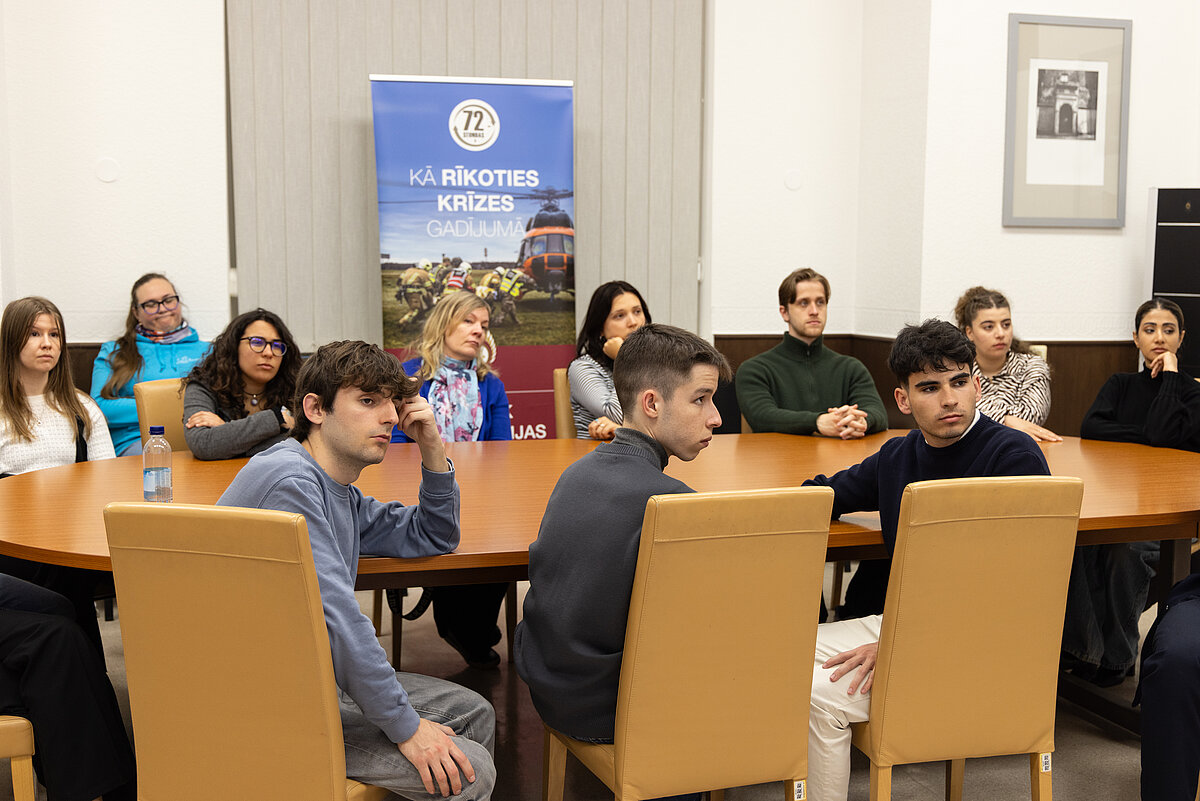
The academic programme opened with a lecture examining the role of disinformation and its impact on democracy, society, and individual choices. Students also gained insights into key cybersecurity issues and current trends during a lecture delivered by a representative of CERT.lv. These sessions provided a theoretical foundation for analysing information security not only as a technological concern but also as a social, political, and communication-related issue.
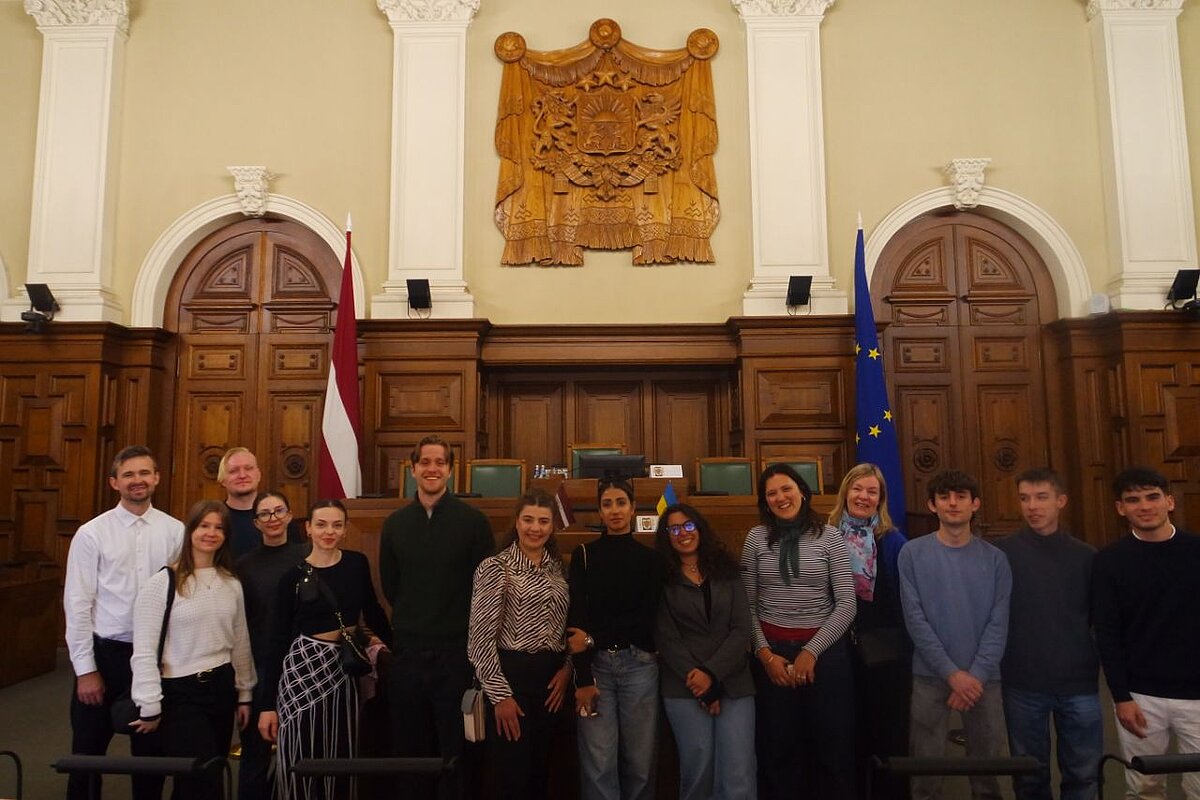
A significant component of the programme focused on familiarising participants with Latvia’s institutional and security policy environment. Students visited the university’s historic main building on Raiņa Boulevard and took part in study visits to the Saeima and the Ministry of Defence of Latvia, where they met with Parliamentary Secretary Liene Gātere. These engagements offered valuable insight into how disinformation and security challenges are addressed at the level of public administration and policymaking.
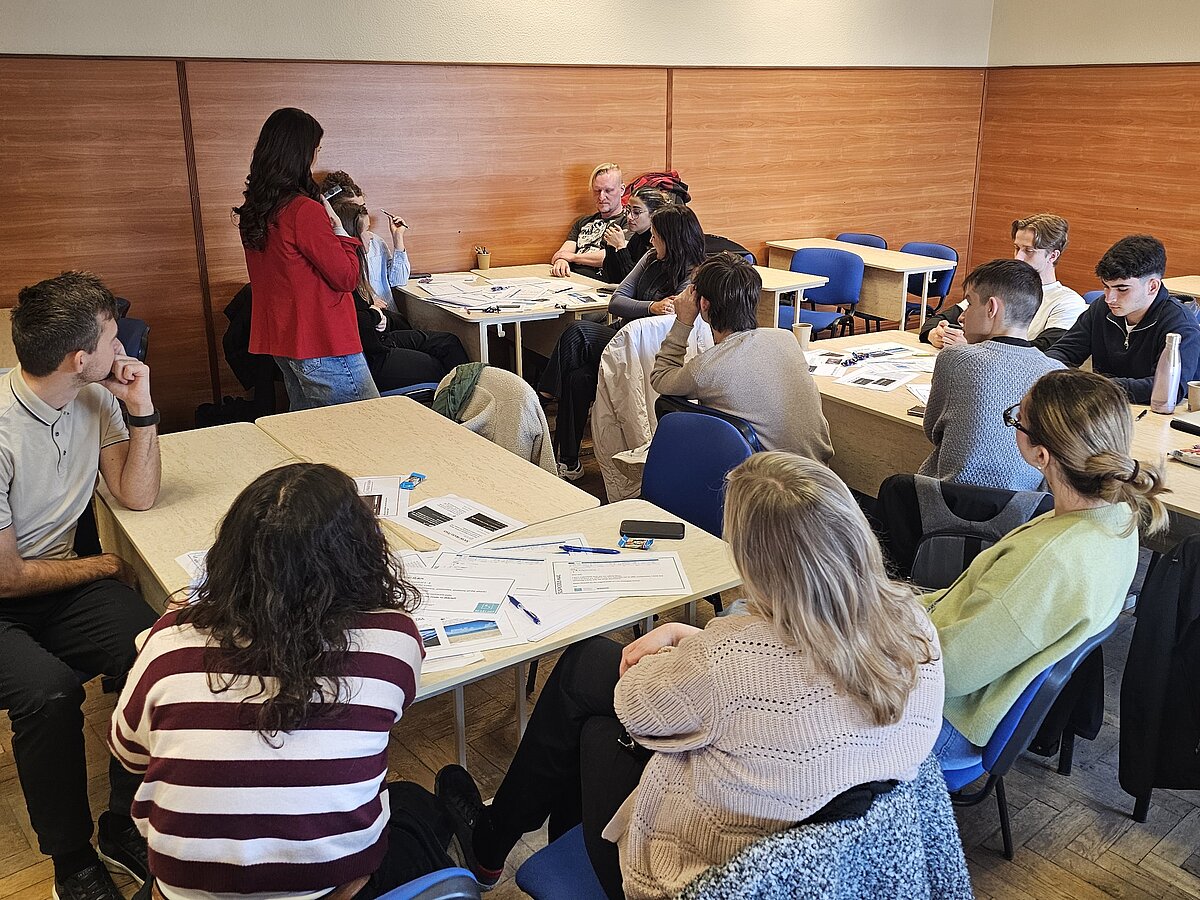
On the fourth day, participants examined security issues in the Baltic region in greater depth. Associate Professor Toms Rostoks delivered lectures on deterrence strategies concerning Russia in the region. Subsequent sessions focused on strategic communication tools and the roles of disinformation, misinformation, and propaganda in exercising informational power. The day concluded with a media literacy workshop from a soft security perspective, led by political scientist and Secretary General of the Latvian Transatlantic Organisation, Sigita Struberga. Students discussed practical approaches to identifying manipulative content and strengthening societal resilience against information influence operations.
On the final day, students participated in a workshop on the phenomenon of fake news, learning to distinguish between misinformation, disinformation, and malinformation. Through group work and presentations, participants consolidated the knowledge gained during the week and demonstrated their ability to critically assess the challenges of the digital information space. The programme concluded with a certificate award ceremony.
The mobility programme also included opportunities to connect with representatives of the faculty’s Student Council. Introductory and networking activities helped foster an open and international learning environment, enabling students to share experiences and compare perspectives on digital information challenges from different national contexts.
Participant feedback highlights particularly strong appreciation for the lecturers’ expertise and teaching quality. Students praised their ability to clearly explain complex topics and respond to questions effectively. The programme’s objectives, administrative support, and communication were also rated highly, with positive comments on coordination, digital communication, the quality of materials, and follow-up engagement.
During their stay, participants also explored Riga and the university environment. A guided tour of the Old Town and a visit to the university’s historic building provided international students with a deeper understanding of Latvia’s academic, cultural, and historical context. This experience complemented the academic programme and encouraged intercultural exchange among students from across the FORTHEM Alliance.
“This Collective Short-Term Mobility programme clearly demonstrates the importance of international and interdisciplinary learning in addressing the challenges of the digital age,” emphasised programme coordinator Aleksandra Kjakste. “It enabled students to combine academic knowledge with practical institutional experience, engage in discussions on the impact of disinformation within the European security context, and develop critical thinking, media literacy, and intercultural collaboration skills. For the University of Latvia, this mobility represents a valuable contribution to FORTHEM cooperation and highlights the faculty’s capacity to deliver internationally relevant, high-quality, and impactful learning experiences in Riga.”
 programme at the Faculty of Economics and Social Sciences of University of Latvia gained an in-depth understanding of the forms and manifestations of disinformation and enhanced their media literacy through hands-on workshops focused on its detection.)