
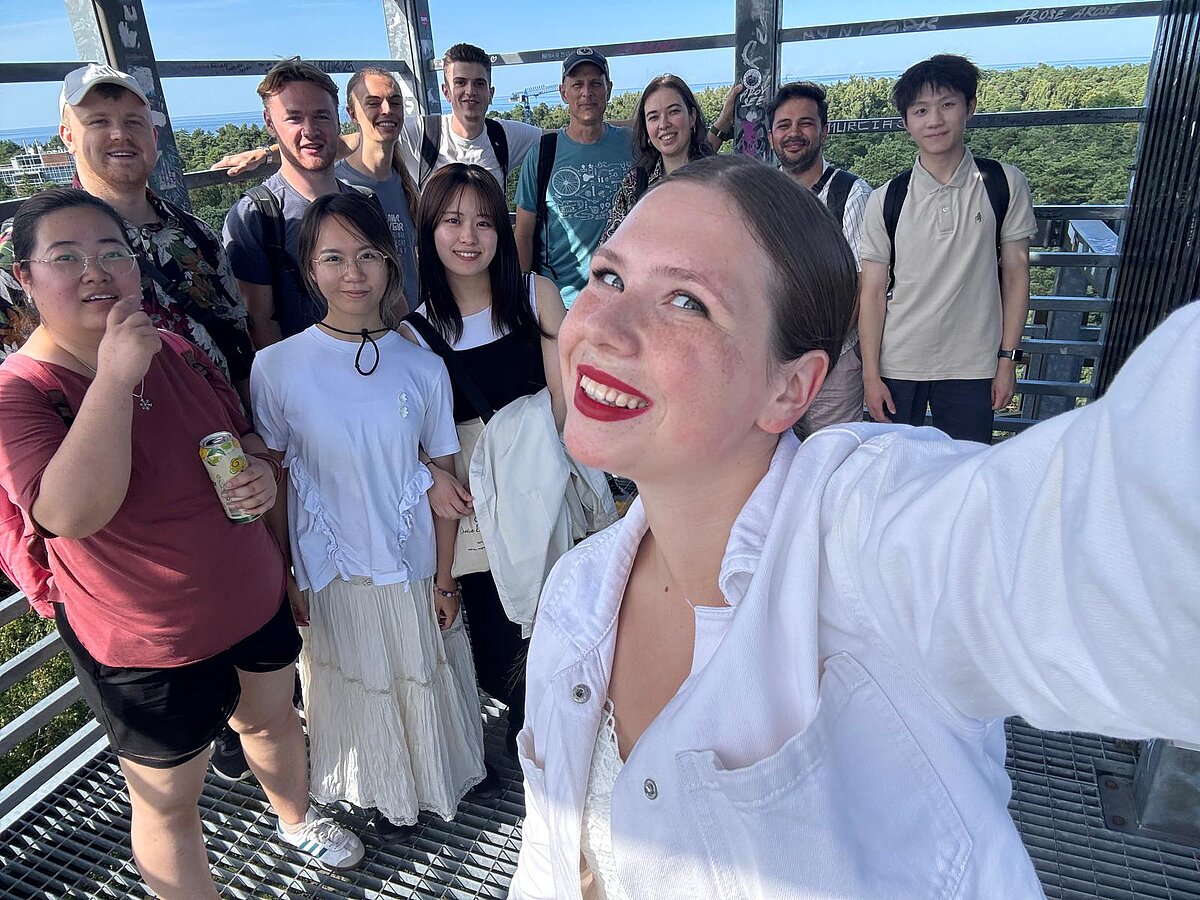
Baltic Security between Historical Legacies and Contemporary Challenges
The two-week programme was designed to provide participants with a comprehensive understanding of the Baltic states as a border region of the West, while exploring both historical developments and current security policy challenges.
During the programme, participants examined the historical development of the Baltic states, relations between Russia and Europe, the dynamics of Latvian–Russian relations, ethnic and linguistic processes within Baltic societies, as well as issues related to Russia’s deterrence in the Baltic region. The programme also addressed economic security, strategic communication, mechanisms of disinformation and propaganda, information perception, and the impact of emotions on societies and social groups.
The academic programme was complemented by study visits to the Museum of the Occupation of Latvia, the Parliament of the Republic of Latvia (Saeima), the National Library of Latvia, the NATO Strategic Communications Centre of Excellence, and the MARTA Centre. These visits provided students with an opportunity to learn about the work of various institutions and participate in discussions on security policy, transatlantic relations, societal resilience, and challenges within the information environment.
At the conclusion of the summer school, participants presented group projects in which they synthesised the knowledge acquired throughout the programme and shared their perspectives on issues related to democracy, disinformation, and security. Following the final presentations, participants received summer school certificates.
Latvia as a Destination for Academic and Cultural Experience
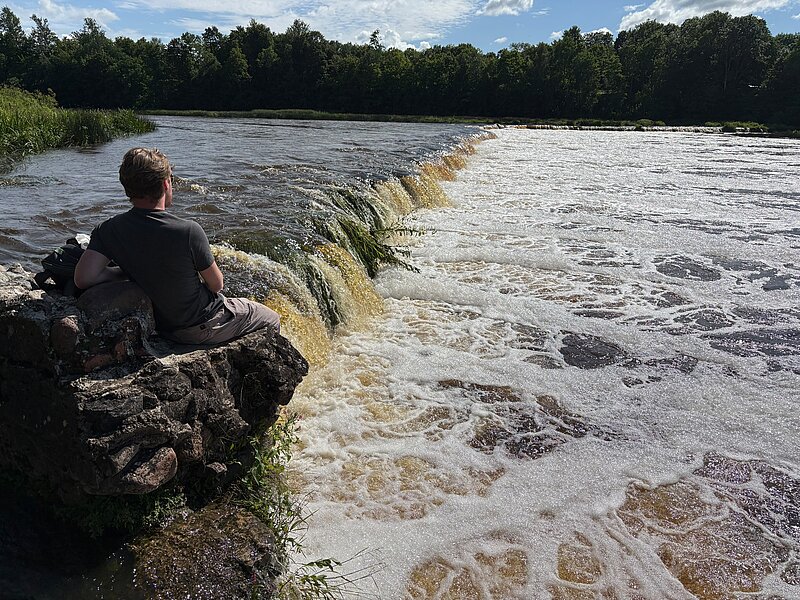
An important component of the summer school was the opportunity to explore Latvia’s cultural and social environment. Participants took part in a guided tour of Riga’s Old Town, a chocolate-making workshop, and excursions to Kuldīga and Jūrmala.
These activities enabled students to experience Latvia beyond the classroom, encouraged interaction among participants, and helped establish international connections in an informal setting.
Participants Highlight Organisation, Communication, and Study Visits as Key Strengths
Following the summer school, participants were invited to provide anonymous feedback on the programme. The survey results demonstrated that the programme’s key strengths were timely communication, effective administrative coordination, study visits, and social activities.
Students described the programme as excellent, well organised, and highly diverse. “Overall, it was a great experience. The programme could be made even more engaging by offering fewer but more focused lectures,” one participant noted in the anonymous survey.
Contribution to the Internationalisation of the UL
The implementation of the summer school in cooperation with Utrecht University represents an important contribution to strengthening the internationalisation of the Faculty of Economics and Social Sciences at the University of Latvia.
This high-profile international programme enhances the University of Latvia’s visibility abroad, demonstrates the faculty’s academic expertise in the fields of security studies, international relations, economics, and social sciences, and lays the foundation for further cooperation with international students, academic staff, and partner universities.
The summer school involved academic staff members Edgars Engīzers, Sigita Struberga, Toms Rostoks, Margarita Dunska, Žaneta Ozoliņa, and Jurģis Šķilters. The event was organised and the programme was developed by Aleksandra Kjakste, Coordinator of International Affairs at UL FESS.
The UL FESS expresses its gratitude to the institutions and cooperation partners that hosted summer school participants and contributed to the implementation of the programme, enabling academic knowledge to be complemented by practical experience and discussions with experts in the field.
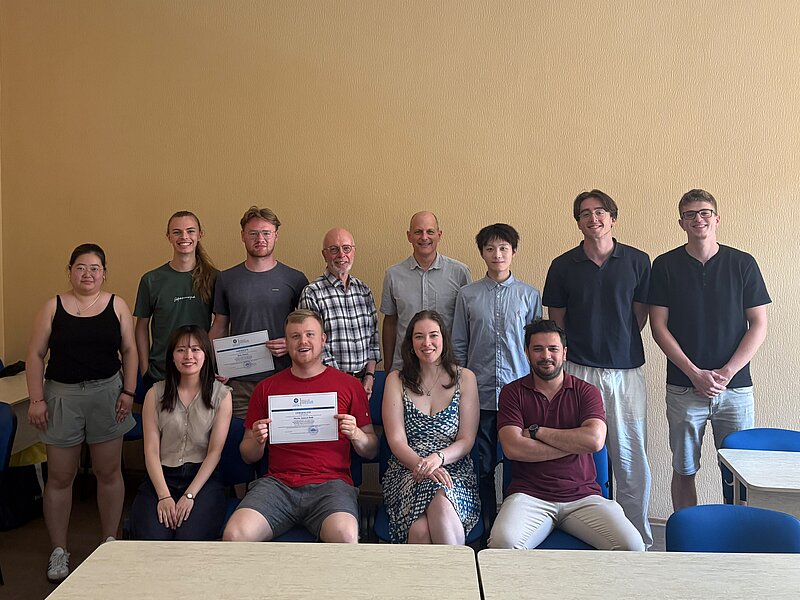
 of the University of Latvia (UL) hosted the international summer school “Navigating Security in the Baltic States: The West’s Stance on Its Borderlands”, organised in cooperation with Utrecht University. The summer school brought together students with diverse academic and cultural backgrounds, creating an environment for international knowledge exchange and discussions on the geopolitical situation of the Baltic states, their historical experiences, and contemporary security challenges.)