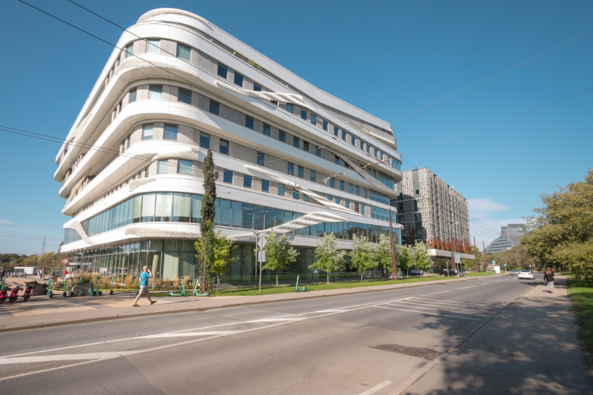
Research Group “Societal Resilience” at the UL Faculty of Economics and Social Sciences
The Societal Resilience Research Group at the University of Latvia brings together researchers in political science, law, psychology, and communication to study how individuals, institutions, and societies prepare for and respond to crises. Their work sits at the intersection of citizen preparedness, hybrid threats, and whole-of-society defense, with a particular focus on the Baltic Sea region.
Lead
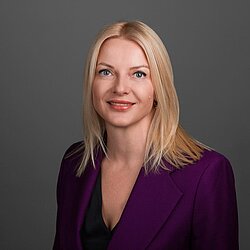
Dr. sc. pol. Ieva Birka
Lead: Leading Researcher Ieva Birka, Faculty of Economics and Social Sciences, University of Latvia
Research Group:
- Leading Researcher Didzis Kļaviņš, UL FESS;
- Leading Researcher Inese Āboliņa, UL FESS;
- Leading Researcher Marita Zitmane, UL FESS;
- Tenured Professor Inta Mieriņa, UL FESS;
- Researcher Irēna Barkāne, Faculty of Law, University of Latvia;
- Leading Researcher Ģirts Dimdiņš, UL FESS; Faculty of Education Sciences and Psychology, University of Latvia;
- Leading Researcher Aleksandrs Koļesovs, UL FESS; UL FESP;
- Doctoral Researcher Guna Gavrilko, UL FESS;
- Expert, Doctoral Researcher Roberts Kits, UL FESS;
- Expert, Doctoral Researcher Armands Aivo Astukevičs, UL FESS;
- Act. Scientific Assistant, Doctoral Researcher Jēkabs Kārlis Rasnačs, UL FESS.
The group studies citizen crisis preparedness, risk perception, and the psychological, legal, and technological factors that shape how people recognize threats and respond to them - from natural disasters to hybrid and geopolitical risks. A core interest is understanding the barriers between awareness and action: why knowing about a risk doesn't always translate into being prepared for it, and what institutions can do to close that gap.
- Birka, I. (2026). "Dataset for the project: Empowering Baltic Resilience: From Awareness to Action via Technology", doi.org/10.71782/DATA/WH6ARB, DataverseLV.
- Birka, I. (2026). "Baltic Individual Crisis Preparedness Barometer 2025 (Urban Preparedness for Emerging Risks in the Baltic Sea Region)", doi.org/10.71782/DATA/HQANMQ, DataverseLV.
Baltic Individual Crisis Preparedness Barometer
2026–2029, University of Latvia High Impact Programme, project No. ZDA-LIP2025/16
A three-year initiative institutionalizing an annual, comparative survey of individual crisis preparedness across eight Baltic Sea Region countries - Denmark, Estonia, Finland, Germany, Latvia, Lithuania, Poland, and Sweden. Building on the University of Latvia's earlier Urban Preparedness for Emerging Risks project, the Barometer integrates political science, psychology, management, and communication research to track citizen threat perceptions, readiness levels, and barriers to preparedness over time. It will deliver an annually updated preparedness index, cross-country analysis, and policy recommendations, in cooperation with the Council of the Baltic Sea States and other partners.
Empowering Baltic Resilience: From Awareness to Action via Technology
2026–2028, Latvian Council of Science Fundamental and Applied Research Project, project No. LZP-2025/1-0191
An interdisciplinary study of citizens' readiness in Latvia, Estonia, and Lithuania to identify and report suspicious activity in the face of hybrid threats — cyberattacks, disinformation, and sabotage. Drawing on social control theory, the project examines the political, legal, psychological, and technological factors shaping public engagement in comprehensive defense, and evaluates the effectiveness of current reporting mechanisms, including digital tools. It aims to translate findings into practical recommendations for strengthening societal trust and individual-driven security.
CPB-Nord: Crisis Preparedness Barometer – Nordic Extension
2026–2027, Council of Baltic Sea States
An extension of the Barometer methodology to Norway and Iceland, in partnership with Smart Innovation Norway and Iceland's Department of Civil Protection and Emergency Management (DCPEM), broadening the comparative dataset on individual crisis preparedness across the wider Baltic-Nordic region.
- Birka, I., & Kļaviņš, D. (2026). Individual Threat Perception and Limits of Household Preparedness in Helsinki, Riga and German Cities. Central European Journal of International and Security Studies. DOI: 10.51870/GBJS3298
- Birka, I. (2026). They See It – Will They Say It? Russian Minorities and Security Reporting on NATO's Front Line. The North Atlantic Review, Vol. 1. Read online
- Birka, I., & Kļaviņš, D. (2026). Baltic Individual Crisis Preparedness Barometer 2025. Policy Recommendations. DOI: 10.5281/zenodo.18655149
- Birka, I., & Kļaviņš, D. (2026). Preparedness, digitalization, and diaspora: An extended framework for evaluating consular emergency response. Evaluation and Program Planning. DOI: 10.1016/j.evalprogplan.2026.102805
- Birka, I. & Gavrilko, G. (forthcoming). Gender and Security in the Baltic Sea Region: A comparative study of northern and central European cities. In Biskupski-Mujanovic, S., Kitchen, V., and Narozhna, T. (eds), Rethinking National Security: Gender, Theory, and Practice. Routledge.
- Kļaviņš, D., & Birka, I. (forthcoming). Feeling Safe but Not Ready: Disaster Risk Perception, Preparedness Gaps, and Urban Resilience in Baltic Capitals.
- "Civilā aizsardzība pusceļā. Eksperti vērtē, kas notiktu plašā krīzē" ("Civil protection halfway there. Experts assess what would happen in a large-scale crisis")
LSM.lv / LTV "De facto," 16 August 2026
TV investigative segment on Latvia's civil protection readiness, featuring Ieva Birka discussing survey findings on why residents struggle to see their own role in national security and crisis reporting, alongside civil protection experts and municipal officials. - "Citizens Are First in Line Against Russia's Sabotage in CEE"
Visegrad Insight, 21 July 2026
Op-ed by Roberts Kits (Resilient Futures Fellow, doctoral researcher at the UL) drawing on the group's Baltic capitals survey data, arguing that citizens play a frontline role in recognizing and reporting hybrid-threat activity, and outlining what governments should do to build effective citizen-reporting systems. - “The Baltic Divide? Russian Speakers after Ukraine”
Talk Eastern Europe, 12 May 2026
How has Russia’s full-scale invasion of Ukraine reshaped the identity and political outlook of Russian-speaking communities in the Baltic states? In this episode of Talk Eastern Europe, Alexandra Karppi speaks with Ieva Birka from the UL about new research on Russian speakers in Latvia and Estonia, the growing security concerns facing the region, and the challenges of social cohesion in an era of hybrid threats and geopolitical tension. - "Neredzi neko, nedzirdi neko, nesaki neko" ("See nothing, hear nothing, say nothing")
IR.lv, Opinion article, 30 March 2026
Latvian-language op-ed by Roberts Kits and Ieva Birka presenting survey findings from Riga, Vilnius, and Tallinn on citizens' understanding of critical infrastructure and their willingness to report suspicious activity, tied to the "Empowering Baltic Resilience: From Awareness to Action via Technology" (LZP-2025/1-0191) project.